Xin Wen Yu Chuang Xin
Even in modern industrial laundries, many routines and processes are still heavy, dirty, and potentially dangerous. Especially repetitive tasks often result in employees making mistakes; some of which can be extremely costly. Fortunately, the industry’s leaders recently focused on the development of new solutions such as robots, artificial intelligence and data management.
Sorting soiled garments is one of the routine tasks where the use of advanced technologies can reduce human interaction to an absolute minimum.
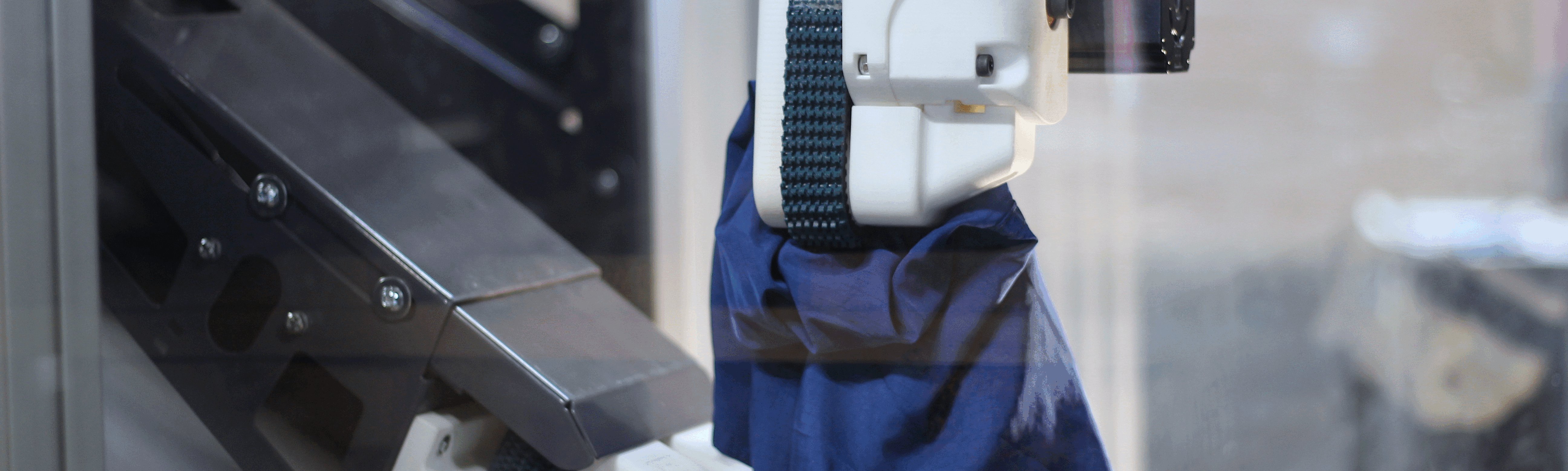
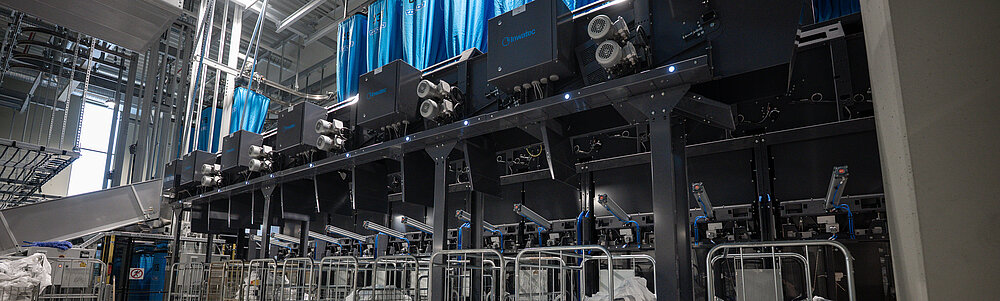
Robots pick up the individual laundry pieces from conveyor belts and transport them to RFID chip readers to identify and register each garment. Directly after that, an X-ray scanner automatically detects unwanted hidden objects in the pockets and rejects these contaminated garments. Only approved laundry articles are forwarded further to be sorted accordingly by the system.
Today, all these tasks can be performed by only a few operators who have to manually empty the pockets of the rejected garments.
Occupational safety through X-ray technology
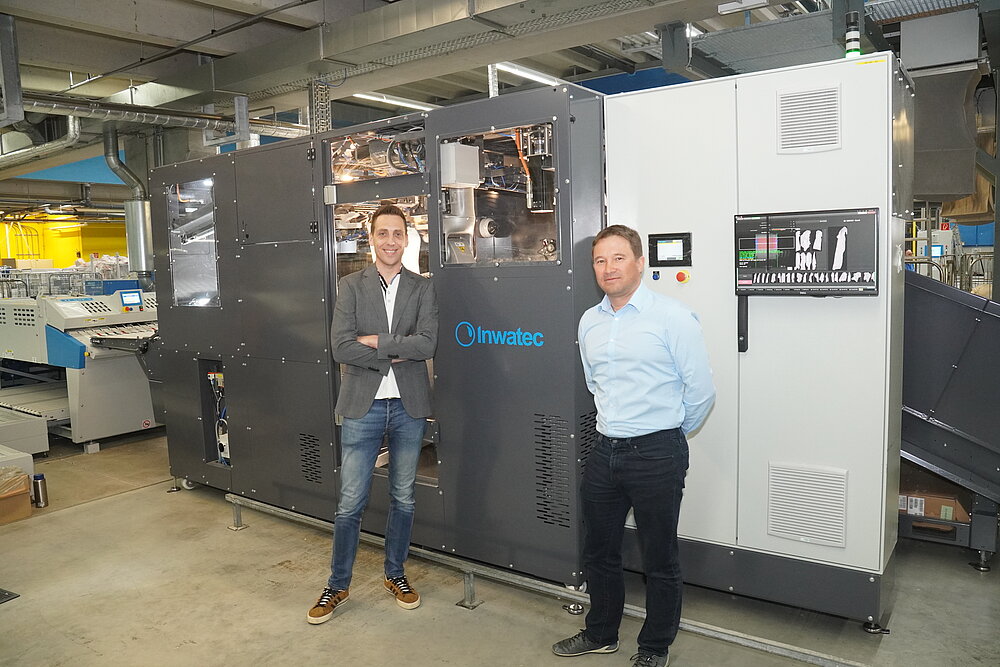
The X-ray scanner also functions perfectly as a stand-alone device: it checks soiled laundry pieces for dangerous foreign items and creates a safe and efficient working environment. With X-ray technology, harmful foreign sharps such as needles, scissors, scalpels, etc. can no longer remain undetected in the pockets.
From human intelligence to artificial intelligence
However, humans are not that easy to replace, as the combination of body and brain is reasonably smart. Robots on the other hand, only do what you tell them to, and that is why building intelligent robots take the best people, you can find. When you have their brains at hand, you can begin working with artificial intelligence, AI.
AI is when you build a computer like a small brain. You teach it by giving it a lot of relevant data with the right solutions. The more patterns the computer can learn, the better. An example are systems based exclusively on visual sorting and mainly used for unmarked garments.
Almost all advances in AI have been made lately when specific input data is used to generate a simple response. If a typical person can do a mental task with less than one second of thought, we can probably automate it now or soon with the help of AI.
With these machines, laundries can perform more demanding and specialized tasks, where robots perform recurring tasks while human operators can take care of customer-related tasks.
The laundry industry is entering a new era in which technology can take over most production processes without human interaction. Together with our partner Inwatec, the JENSEN-GROUP is once again shaping the future of the laundry industry. These latest innovations in robotics and artificial intelligence increase the IQ and productivity in laundries.
 八月 2026
  八月 2026
 2026 年上半年业绩体现了全球洗涤企业对JENSEN-GROUP一如既往的信任:集团上半年营收增长 20.2%,达到 3.162 亿欧元。上半年新接订单额同样创下亮眼新高,总额达 2.792…
 七月 2026
 With state-of-the-art laundry technology, continuous investments, and a clear vision for the future, STIMPFL TEXTILE CARE GmbH in Tyrol is consistently driving its…
 六月 2026
 列支敦士登公国地处阿尔卑斯山脉腹地,毗邻各大国际化经济区域。坐落于Balzers的FIX AG公司,与Wallisellen的Textil-Service FREI…
 六月 2026
 自 5 月 5 日起,新成立的 J4B 公司将作为JENSEN-GROUP官方授权本地合作商,负责JENSEN 在捷克共和国与斯洛伐克全境业务,公司总部设立于布拉格附近的Stochov。该企业由Otto Burger与其弟弟Jan Burger共同运营,二人深耕当地洗涤行业多年,掌握丰富市场经验,同时拥有深厚行业人脉资源。

