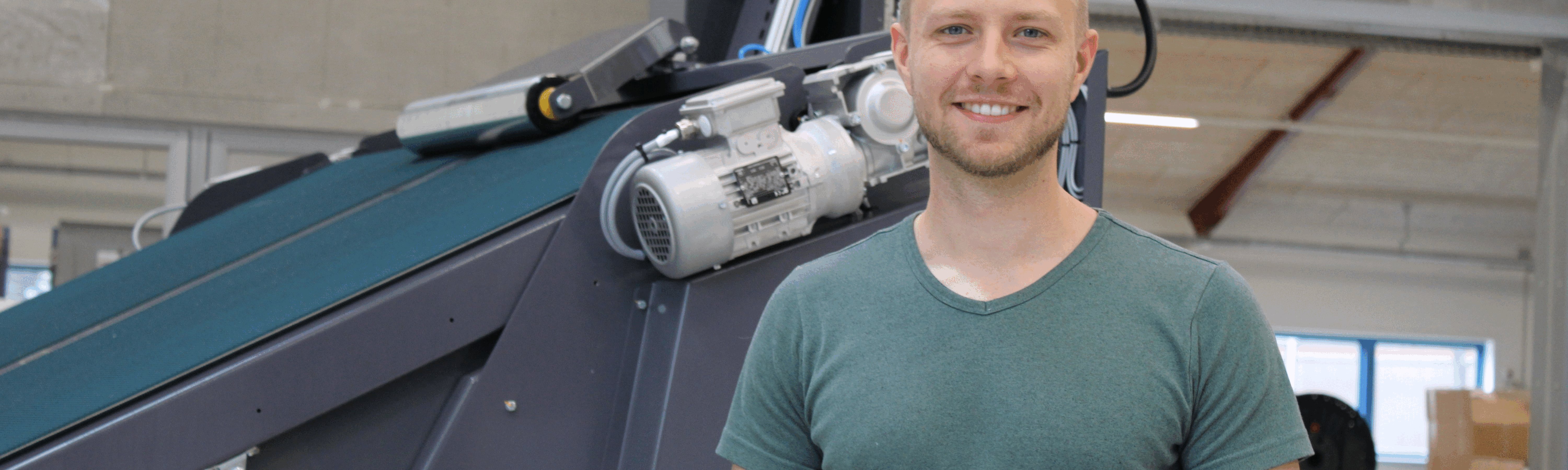
“The Inwatec installations operate with multiple neural networks, which is, by definition, an AI approach”, confirms Martin Jakobsgaard, Software Engineer at Inwatec ApS
Xin Wen Yu Chuang Xin
Artificial intelligence has a real buzz and is making a huge difference in all kinds of industries, most notably in laundries. The automation of the soil sort area, for instance, is now taken care of by robots utilizing AI. It is the safest, most hygienic and most sustainable way to sort soiled linen – and one day soon, it will be the most common way as well. We asked Martin Jakobsgaard, software engineer at Inwatec ApS, to explain how much “real AI” is involved. But first, let us have a look at the definition of Artificial Intelligence:
About AI
Artificial Intelligence refers to the development of computer systems and software that can perform tasks typically requiring human intelligence. These tasks include problem-solving, learning from experience, understanding natural language, recognizing patterns, and making decisions. AI systems are designed to mimic or simulate human cognitive functions, such as perception, reasoning, problem-solving, and decision-making, often with the goal of automating processes, improving efficiency, and handling complex tasks that would be challenging or time-consuming for humans to perform. AI encompasses various subfields, including machine learning, natural language processing, computer vision, and robotics, and it continues to advance and evolve with the goal of creating systems that can exhibit human-like or superhuman intelligence in specific domains.
Systems from Inwatec utilizing AI
The ODIN X-ray scanner is capable of scanning and subsequently rejecting garments containing harmful foreign objects, such as pens, nails, or needles. To achieve the best possible results, cutting-edge Artificial Intelligence software is utilized to continuously train the machine and optimize its parameters according to the specific requirements of each laundry. The quality of detection ultimately depends on the types of garments being scanned. We have collected millions of images, which are segmented into samples for training a neural network with approximately 5 million of those samples. Our goal is to provide the neural network with enough samples to have seen most, if not all, items that pass through a laundry. Neural networks excel at identifying items they have encountered before. Hence, we aim to provide as many examples as possible of what accepted items should look like (e.g., buttons, zippers) and what foreign, unwanted objects (e.g., knives, scalpels) should look like. Detecting metal is relatively straightforward, but identifying plastic items is more challenging. A conventional metal detector, as used in most laundries, would only reject a knife but not a plastic pen.
The initial version of ODIN did not rely on AI. By transitioning to normal computer vision with AI, we have increased the detection rate to up to 99%. Taking a picture with an X-Ray scanner is not a complex task, but finding all the undesired items while accepting items belonging to a garment is. The AI in ODIN ensures that the system can differentiate between laundry items that need to be rejected due to the presence of unwanted objects.
The HEIMDAL Camera is built upon Artificial Intelligence to sort products based on their visual characteristics, such as colors, patterns, textures, and even size. Coupled with intelligent software, HEIMDAL can distinguish between different types of laundry articles. Each project receives its unique set of data, which requires training for the specific sorting composition and product portfolio. Currently, we have various systems in operation for workwear, linen, and mixed products. Even without RFID, HEIMDAL can achieve higher sorting accuracy than manual sorting.
The input for HEIMDAL is also an image, but unlike the X-Ray image, it is a real color photograph. The system is similar to ODIN in that it employs a neural network to create a fingerprint of the item, enabling precise identification, distinguishing between items such as small towels and large towels.
Comparison with Our Daily Dose of AI: ChatGPT
ChatGPT is trained using stored, collected data that is transformed into responses through neural networks. This process mirrors how AI functions in laundries. The key difference lies in our use of human-labeled images, which are defined and entered into the system by humans to ensure the accuracy of the data fed into the neural network. We collaborate closely with software engineers to refine the models, create the correct dataset, and establish an effective training process right from the outset. When training the AI for ODIN, it may occasionally make incorrect choices or mistakes.
The system can only improve when models are trained through neural networks, not solely relying on predictions - which can be erroneous. Using a neural network is, by definition, an AI approach – successfully applied in ChatGPT, a number of industrial applications in all kinds of industries and in the sorting area of many laundries around the world.
Without AI, it would merely function as a photographic tool, necessitating a substantial team of operators to handle the detection of items. Thanks to AI, the process of sorting soiled textiles is automated to a great extent, reducing the need for human intervention in the removal of detected unwanted items.
 八月 2026
  八月 2026
 2026 年上半年业绩体现了全球洗涤企业对JENSEN-GROUP一如既往的信任:集团上半年营收增长 20.2%,达到 3.162 亿欧元。上半年新接订单额同样创下亮眼新高,总额达 2.792…
 七月 2026
 With state-of-the-art laundry technology, continuous investments, and a clear vision for the future, STIMPFL TEXTILE CARE GmbH in Tyrol is consistently driving its…
 六月 2026
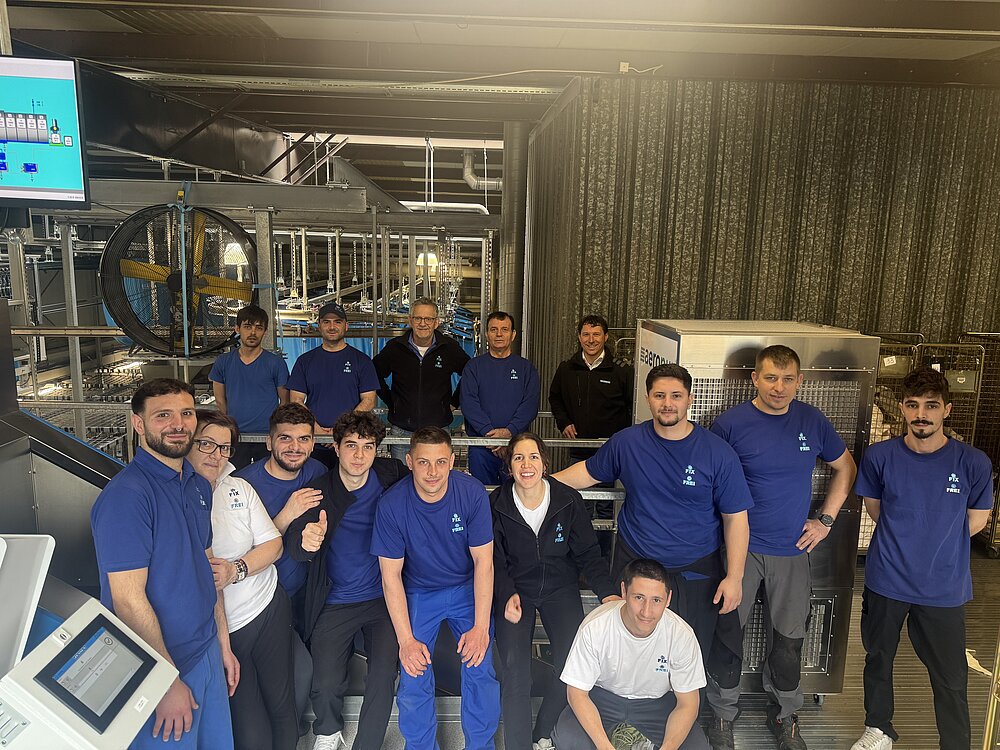
 列支敦士登公国地处阿尔卑斯山脉腹地,毗邻各大国际化经济区域。坐落于Balzers的FIX AG公司,与Wallisellen的Textil-Service FREI…
 六月 2026
 自 5 月 5 日起,新成立的 J4B 公司将作为JENSEN-GROUP官方授权本地合作商,负责JENSEN 在捷克共和国与斯洛伐克全境业务,公司总部设立于布拉格附近的Stochov。该企业由Otto Burger与其弟弟Jan Burger共同运营,二人深耕当地洗涤行业多年,掌握丰富市场经验,同时拥有深厚行业人脉资源。

